
The Commuter Dilemma: Biting Your Nails While Driving (And How to Stop)
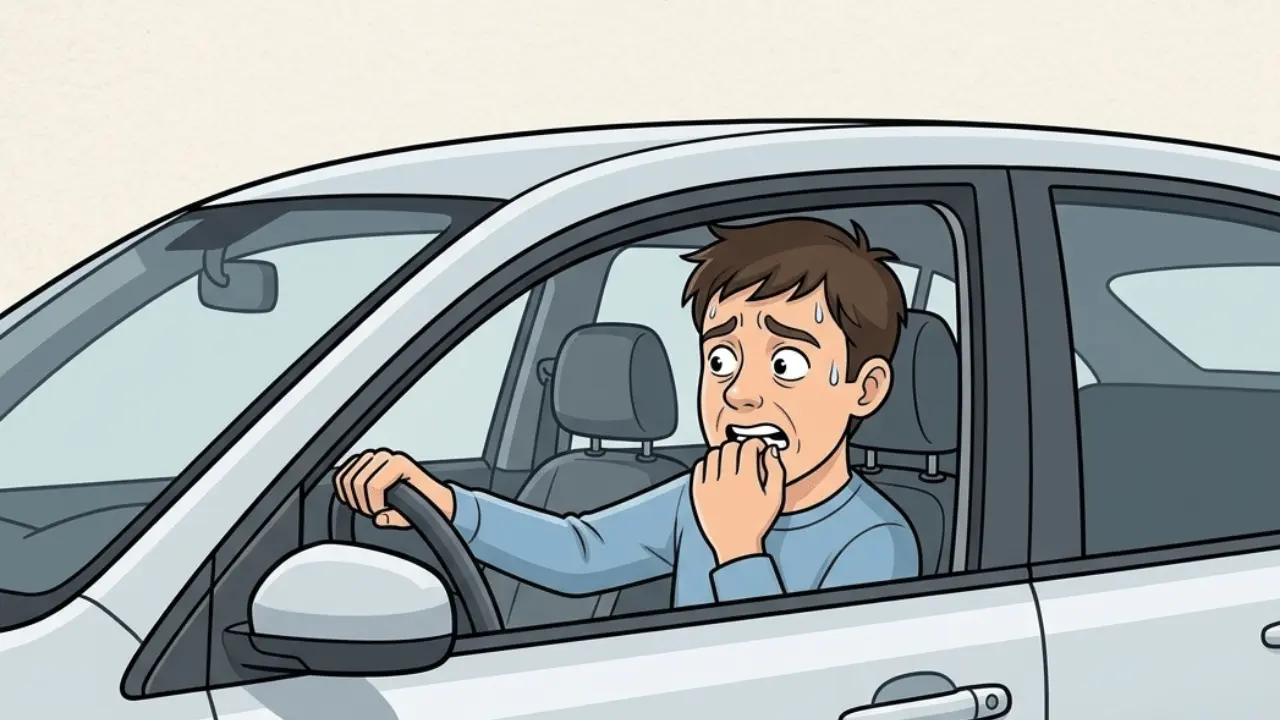
Stuck in bumper-to-bumper traffic, staring at a sea of red taillights. Suddenly, you realize your fingers are in your mouth. You weren’t thinking about it, but the habit won again.
If this sounds familiar, you are not alone. For many people struggling with compulsive nail biting (onychophagia), the car is the perfect storm. it’s a trigger zone that combines boredom, physical restriction, and a semi-passive mental state.
Understanding why the driver’s seat is such a powerful trigger is the first step toward reclaiming your hands.
The Psychology of the ‘Commuter Chew’
Why is the car such a common trigger? It’s rarely about aggressive road rage; it’s about a subtle shift in your mental state.
- The Boredom Trigger: On long, repetitive highway stretches or familiar routes, your mind goes onto ‘autopilot.’ To keep itself stimulated, the brain seeks sensory input. If there’s nothing engaging to do, the automatic, self-soothing habit of nail biting kicks in to fill the gap.
- The Stress & Anxiety Trigger: While your brain might be on autopilot, your body is still experiencing the physiological stress of driving. Heavy traffic, merging cars, or worrying about being late can raise your baseline anxiety. Nail biting becomes a subconscious release valve for that tension.
- Restricted Movement: When you are driving, your physical options are limited. You can’t stand up, walk around, or engage in complex activities. This restricted movement makes any restless energy manifest in the few actions available, like moving your hand to your mouth.
Practical ‘In-Car’ Strategies to Break the Habit
You can’t control the traffic, but you can control your hands. Here are five practical, immediate strategies to implement during your next commute.
1. Implement ‘Strategic Fidgeting’
The goal is to provide a safe, non-damaging alternative to biting. Keep a specific fidget toy or accessory in your center console or cup holder while still being able to maintain eyes on the road.
- Fidget Rings: Discretely worn, they allow you to keep your hands on the wheel while spinning a small band.
- Stress Balls: Perfect for holding while stopped at red lights.
2. The Driving Glove Method
This is a simple but effective physical barrier. A lightweight pair of driving gloves (even cotton ones work well) makes it physically impossible to bite your nails without removing the glove first.
This extra step forces a conscious choice, breaking the automatic loop.
3. The ‘Two-Hand’ Rule
Even if you don’t have gloves, prioritize keeping both hands on the wheel.
Positions like 9-and-3 or 10-and-2 are not only safer but also keep both arms engaged, making it harder for one hand to wander toward your face.
4. Audio Diversion
If your brain is the trigger, keep it busy. Swap passive radio listening for an engaging podcast, audiobook, or language-learning course.
If your mind is deeply focused on an interesting topic, it is far less likely to seek sensory stimulation through biting.
5. Keep the Interior Tidy
A clean environment reduces subtle triggers. Ensure your cup holders are free of distractions and keep a quality, smooth glass nail file in your glove compartment.
Safe, Sensory-Based Alternatives
If the urge is undeniable, swap the harmful act of biting with a safer oral fixation.
- Sugar-Free Gum: A dynamic chewing motion that provides intense sensory feedback.
- Crunchy Snacks: Keep a few celery or carrot sticks in a spill-proof cup holder for an urgent crunchy relief.
- Mindful Sipping: Keep a bottle of water within reach and take a slow, intentional sip when you feel the urge to bite. It keeps your hands and mouth occupied.
Making Your Drive Less Stressful
Breaking a lifelong habit is a journey, and changing your commute is a powerful milestone.
Experiment with these tools and find what works for you. Your hands, and your peace of mind, are worth the effort.