
Is it Better to Clip or File Nails? What is Healthier?
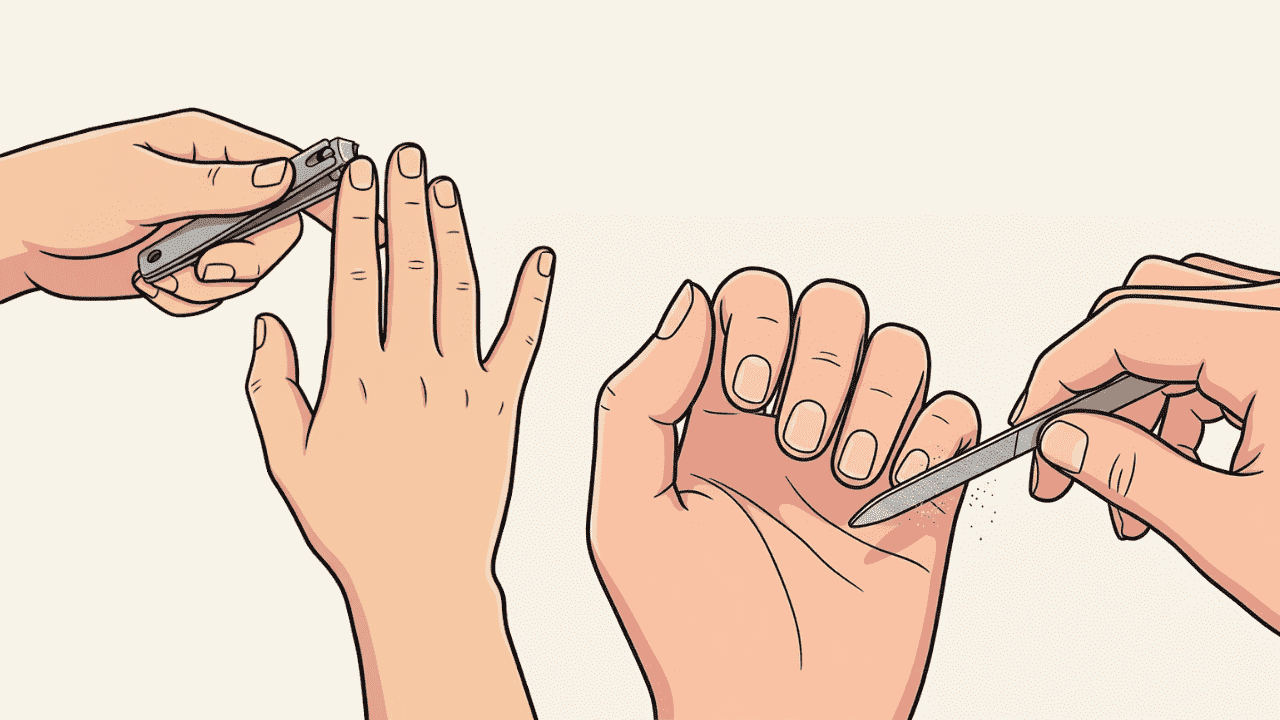
For nail-biters, we’ve spent years trying to get fingernails to the point where we need actual tools to shorten them. And that is a big step!
But once you stop biting, you face a new crossroads in your grooming routine. Do you reach for the clippers to manage the new growth, or do you invest in a file?
In short, filing is significantly better than clipping. While clipping is a fast way to remove length, it is a high-pressure process that can shatter the delicate structure of your nails.
Filing, on the other hand, seals the nail’s edge, prevents future damage, and removes the “rough triggers” that lead to habit relapse.
Why Clippers Can Cause Damage
Your fingernails are made of roughly 25 to 30 layers of compacted keratin. When you use a nail clipper, the blades exert a crushing force to “snap” through the nail.
- Micro-Fractures: This pressure creates microscopic cracks across the nail plate.
- The Peeling Effect: These cracks eventually lead to the nail layers separating (delamination), which is why your nails might feel “flaky” or peel off in thin sheets a few days after clipping.
- The “Biting Trigger”: For former biters, these tiny peels and cracks are often what cause you to start picking or biting again to “fix” the surface.
Your nails are already brittle from years of biting and trauma. We need to heal those nail beds and not apply the same amount of force as a bite.
Why Filing is the “Sealant” Your Nails Need
Filing works through gentle friction rather than blunt force. Think of it as sanding a piece of wood vs. chopping it with an axe.
- Smooth Edges and Better Nail Health: Filing prevents splits, cracks, and tip-related damage caused by the compression of clippers. It also eliminates the jagged steps left by clipping, creating a perfectly smooth perimeter that won’t snag on fabric or hair.
- Structural Integrity: Filing actually “fuses” the keratin layers together. By smoothing the edge, you prevent water, soap, and chemicals from seeping between the layers, which keeps the nail strong and flexible.
Choosing the Right Nail Filer
The “better” method only works if you use the right equipment. Surprisingly enough, there are many different types of nail files to choose from.
If you are unsure, go with a glass file.
| Tool | Impact on Nail | Recommendation |
| Metal File | Harsh. Can tear the nail like a saw. | Avoid for natural nails. |
| Emery Board | Functional, but can be too abrasive. | Use a high-grit (fine) side. |
| Glass File | Extremely fine. “Shaves” the nail smooth. | The best choice for health. |
This Doesn’t Mean You Can NEVER Clip Your Nails
Filing is healthier, but it isn’t always efficient. If you’ve gone weeks without biting and suddenly have significant length, you don’t have to file for an hour.
Use sharp clippers to take off the bulk of the length, but stop 2mm before you reach your desired shape. Use a glass file to handle that final 2mm.
This keeps the “crush zone” from the clippers away from the final edge of your nail, giving you the speed of clipping with the health benefits of filing.
Pro Technique: The “One-Way” Rule
The biggest mistake people make with a file is the “sawing” motion (back and forth). This creates heat and friction that can fray the nail.
To file properly:
- Start at the outer corner.
- Move toward the center in one fluid stroke.
- Lift the file, return to the corner, and repeat.
Conclusion
Transitioning from biting to a proper grooming routine is a major win for your health and confidence.
While clippers are a convenient utility, the file is the tool that will actually transform the quality of your nails.